The Language of Silver: Moroccan Amazigh Jewelry and Its Symbolism

Phone
+212 660 44 471

Contactyourtourguide@gmail.com

Office
1111 rue El,Rue koufa Essaouira 44000

Hours
Monday-Sunday:
24/7
Morocco’s cultural heritage is often celebrated through its architecture, music, cuisine, and colorful festivals. Yet among the country’s most fascinating artistic traditions lies a lesser-known treasure: Moroccan Amazigh jewelry. Crafted primarily from silver and adorned with intricate symbols, these remarkable pieces tell stories that stretch back centuries.
For travelers exploring Morocco beyond its famous medinas and desert landscapes, Amazigh jewelry offers a unique window into the country’s indigenous culture. Every necklace, fibula, bracelet, and pendant carries meaning. These are not merely decorative objects; they are symbols of identity, protection, status, spirituality, and community.
From the rugged peaks of the Atlas Mountains to remote villages in southern Morocco, Amazigh jewelry remains one of the most powerful expressions of cultural heritage. Understanding its symbolism allows visitors to appreciate not only the beauty of these handcrafted works but also the stories they preserve.
In this guide, we’ll explore the origins of Moroccan Amazigh jewelry, the significance of silver, the meanings behind traditional symbols, regional styles, and where travelers can discover authentic pieces during their journey through Morocco.
Understanding Amazigh Culture in Morocco
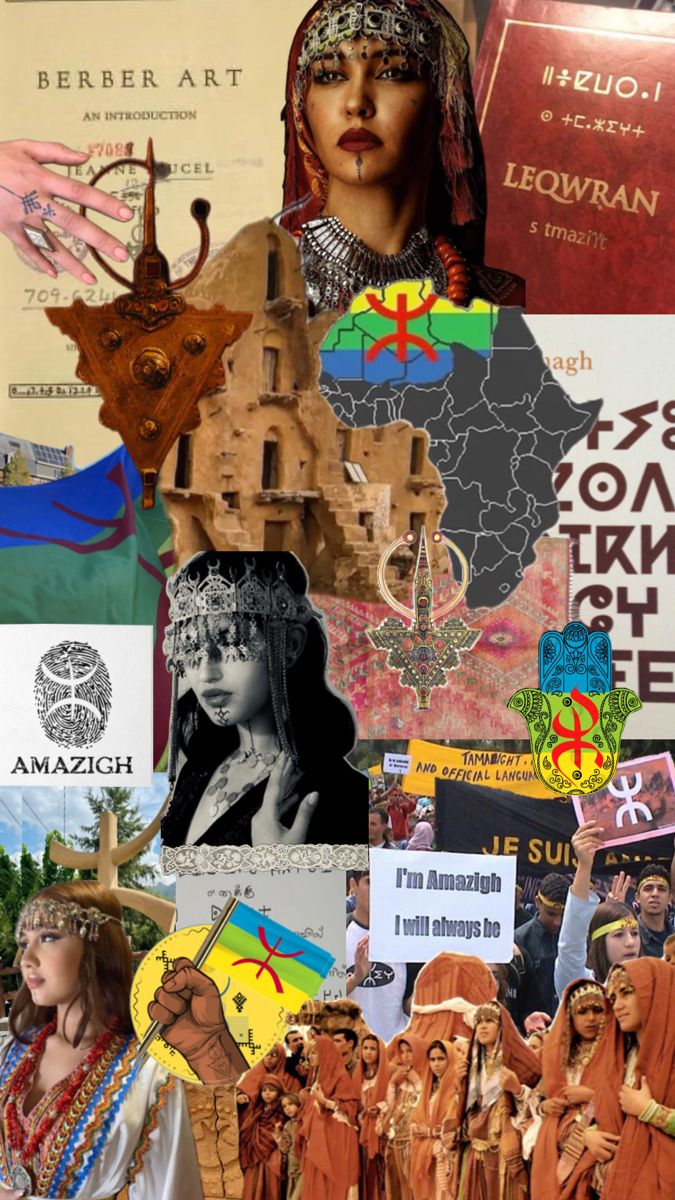
The Amazigh people, often referred to as Berbers, are the indigenous inhabitants of North Africa. Their presence in Morocco predates Arab influence by thousands of years, and their cultural traditions continue to shape the country’s identity today.
The term “Amazigh” means “free people” or “noble people.” Throughout history, Amazigh communities have maintained distinct languages, customs, artistic traditions, and social structures.
Today, Amazigh culture remains especially vibrant in regions such as:
- The High Atlas Mountains
- The Anti-Atlas Mountains
- The Middle Atlas
- The Souss Valley
- The Sahara oases
Jewelry occupies a particularly important place within Amazigh society. Unlike modern accessories that are often worn simply for fashion, traditional Amazigh jewelry serves social, spiritual, and symbolic purposes.
For generations, women have worn jewelry as a visible expression of family heritage, marital status, tribal identity, and personal protection.
Why Silver Became the Metal of Amazigh Identity
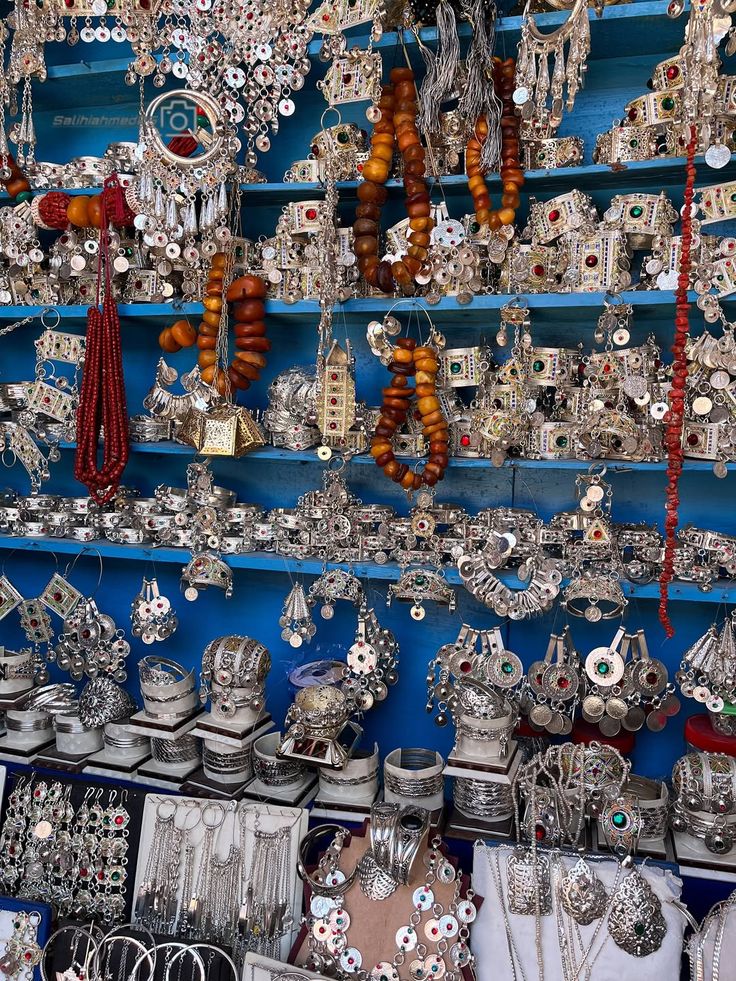
One of the first things visitors notice about Amazigh jewelry is the predominance of silver.
While gold is often associated with luxury in many cultures, silver has historically held greater significance among Amazigh communities.
A Symbol of Purity and Protection
Silver was believed to possess protective qualities. Many Amazigh families considered it a powerful metal capable of warding off negative energies and the evil eye.
As a result, silver jewelry often incorporated protective symbols and amulets. Together, the metal and its designs formed a spiritual shield for the wearer.
A Practical and Valuable Asset
Historically, jewelry also functioned as a form of portable wealth.
In rural communities, women often owned substantial collections of silver jewelry that could be passed down through generations or used during times of financial hardship.
Unlike currency, silver ornaments retained their value and could easily be transported if families migrated or traded across regions.
A Reflection of Local Resources
Trade routes connecting Morocco to sub-Saharan Africa, the Mediterranean, and the Middle East helped make silver accessible to skilled artisans.
Over time, Moroccan silversmiths developed distinctive techniques that transformed raw silver into elaborate works of art.
The Hidden Language of Amazigh Symbols
Perhaps the most fascinating aspect of Moroccan Amazigh jewelry is its symbolic vocabulary.
Many designs function as a visual language that communicates messages without words.
These symbols often appear on necklaces, pendants, bracelets, earrings, and fibulas.
The Triangle
The triangle is among the most common Amazigh symbols.
It is often associated with:
- Feminine energy
- Fertility
- Motherhood
- Protection
Many researchers believe the shape represents the female form and symbolizes life-giving power.
The Cross
Various cross-shaped motifs appear throughout Amazigh jewelry.
Unlike religious crosses found elsewhere, Amazigh crosses often symbolize:
- Harmony
- Balance
- Direction
- Connection between earth and sky
Different regions developed unique interpretations of this ancient design.
The Eye Motif
The eye is a powerful protective symbol throughout North Africa.
Known for its connection to protection against envy and misfortune, the eye motif frequently appears in pendants and amulets.
Travelers may recognize similarities between Amazigh designs and protective symbols found across the Mediterranean world.
Geometric Patterns
Diamonds, zigzags, lines, and repetitive geometric forms are far more than decorative elements.
These motifs can symbolize:
- Water
- Fertility
- Agricultural abundance
- Life cycles
- Tribal identity
The repetition of geometric patterns reflects a deep connection between Amazigh communities and the natural world.
Fibulas: The Signature Piece of Amazigh Jewelry
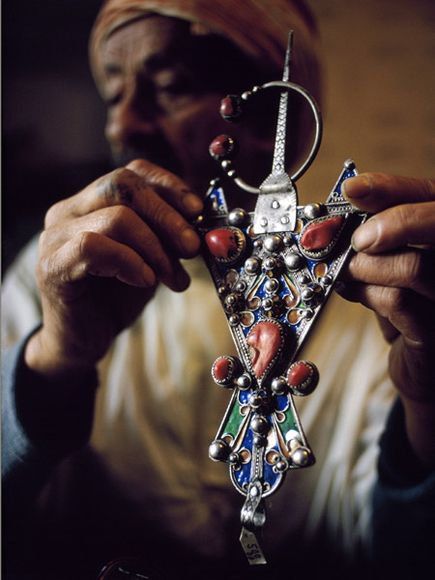
Among all traditional Amazigh ornaments, few are as iconic as the fibula.
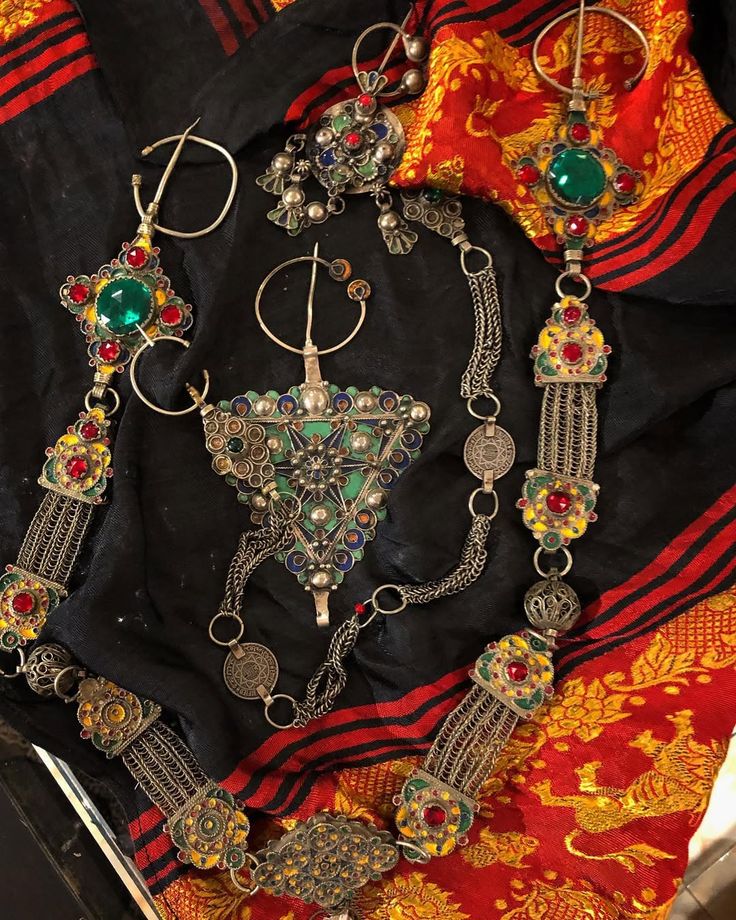
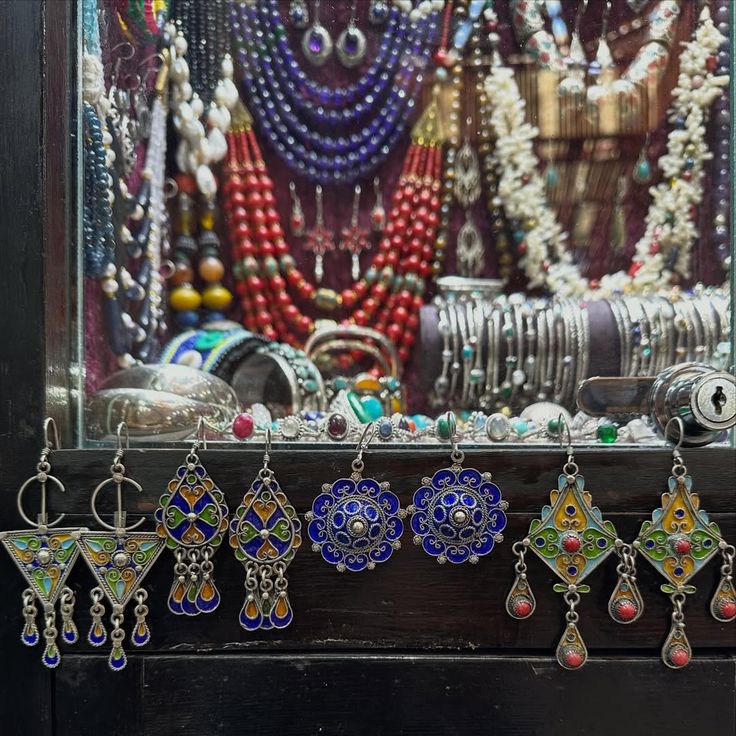
A fibula is a large decorative brooch used to secure garments. Historically, Amazigh women wore pairs of fibulas connected by chains across the chest.
These pieces served both practical and symbolic functions.
More Than Clothing Fasteners
Fibulas held garments together, especially traditional woolen cloaks and dresses. However, they also conveyed information about the wearer’s community and social status.
The size, decoration, and craftsmanship often reflected family wealth and regional traditions.
Regional Variations
Fibulas differ considerably across Morocco.
Some feature:
- Triangular designs
- Engraved geometric patterns
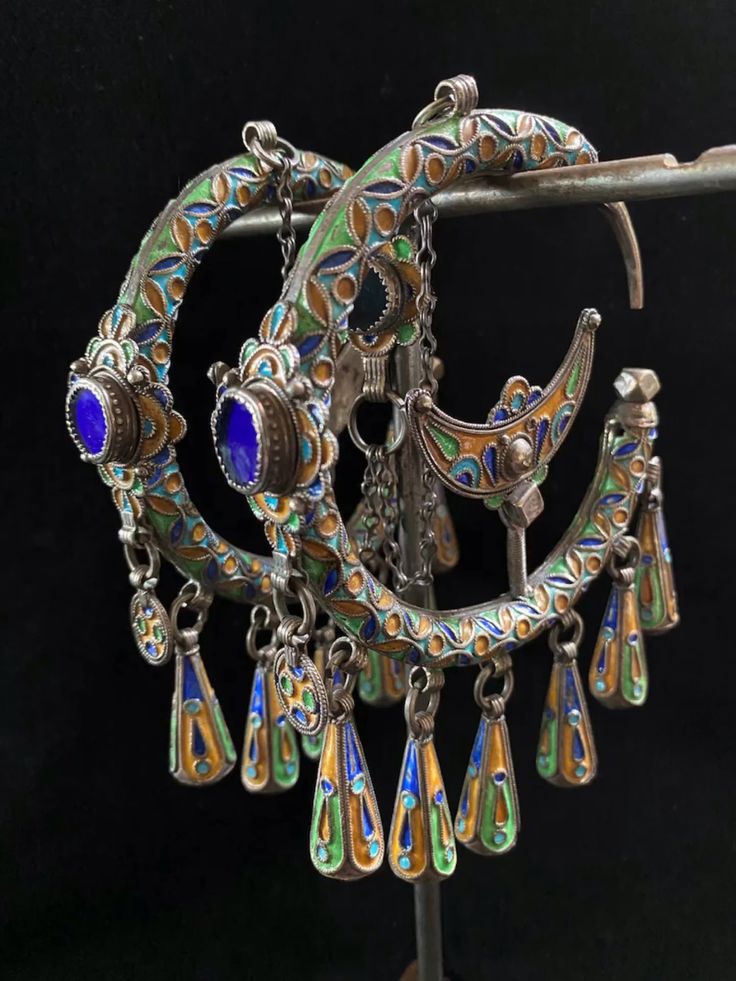
- Colored enamel
- Hanging coins
- Coral decorations
Each variation reflects the artistic identity of a particular Amazigh region.
Today, antique fibulas are highly sought after by collectors and cultural enthusiasts.
The Role of Color in Amazigh Jewelry
Although silver dominates Amazigh jewelry, color also plays a significant symbolic role.
Traditional artisans frequently incorporated enamel, coral, amber, and semi-precious stones.
Red: Life and Protection
Red is perhaps the most prominent color found in Amazigh jewelry.
Often represented through coral or enamel, red symbolizes:
- Vitality
- Strength
- Protection
- Good fortune
Blue: Spiritual Connection
Blue elements often represent:
- Wisdom
- Spirituality
- Protection from negative forces
The color’s association with the sky and water gives it special significance.
Green: Fertility and Nature
Green symbolizes:
- Growth
- Prosperity
- Agricultural abundance
In agricultural communities, green motifs reflected the importance of fertile land and successful harvests.
Jewelry as a Marker of Identity
For centuries, Amazigh jewelry served as a visual form of identification.
Before widespread literacy and modern documentation, clothing and jewelry communicated essential information about an individual’s background.
Tribal Affiliation
Specific styles, motifs, and construction techniques often indicated membership within a particular tribe or region.
Experienced community members could identify a person’s origins simply by examining their jewelry.
Marital Status
Certain pieces were traditionally associated with marriage.
Wedding jewelry often formed an important part of a bride’s dowry and symbolized the union between families.
Social Standing
Large, ornate collections frequently reflected family prosperity.
However, even modest pieces carried deep personal and cultural significance.
raditional Craftsmanship: A Heritage Passed Through Generations
The creation of Amazigh jewelry requires remarkable skill.
For generations, artisans have passed techniques from master to apprentice through hands-on learning.
Handcrafted Techniques
Traditional silversmiths employ methods such as:
- Hammering
- Engraving
- Filigree work
- Casting
- Enameling
Many workshops continue to rely on techniques that have remained largely unchanged for centuries.
The Importance of Artisan Knowledge
Creating authentic Amazigh jewelry involves more than technical ability.
Artisans must also understand the meanings behind symbols, patterns, and regional styles.
Their work preserves cultural knowledge that might otherwise disappear.
Regional Styles Across Morocco
One reason Amazigh jewelry is so captivating is the diversity found across Morocco.
Different regions have developed distinct artistic traditions.
High Atlas Jewelry
The High Atlas Mountains are known for bold silver pieces featuring geometric motifs and triangular fibulas.
Jewelry from this region often emphasizes protection and tribal identity.
Anti-Atlas Traditions
The Anti-Atlas region showcases intricate silverwork combined with colorful enamel.
Pieces from this area frequently display vibrant reds, blues, and greens.
Southern Moroccan Styles
Communities near the Sahara developed jewelry influenced by caravan trade routes.
These designs often incorporate coins, amber, and decorative chains.
Souss Valley Craftsmanship
The Souss Valley is renowned for finely detailed silver ornaments that combine practicality with artistic sophistication.
Each region contributes a unique chapter to Morocco’s jewelry heritage.
Amazigh Jewelry and Moroccan Weddings
Traditional weddings remain one of the most important occasions for displaying Amazigh jewelry.
Bridal adornment transforms jewelry into a powerful symbol of celebration and continuity.
Bridal Treasures
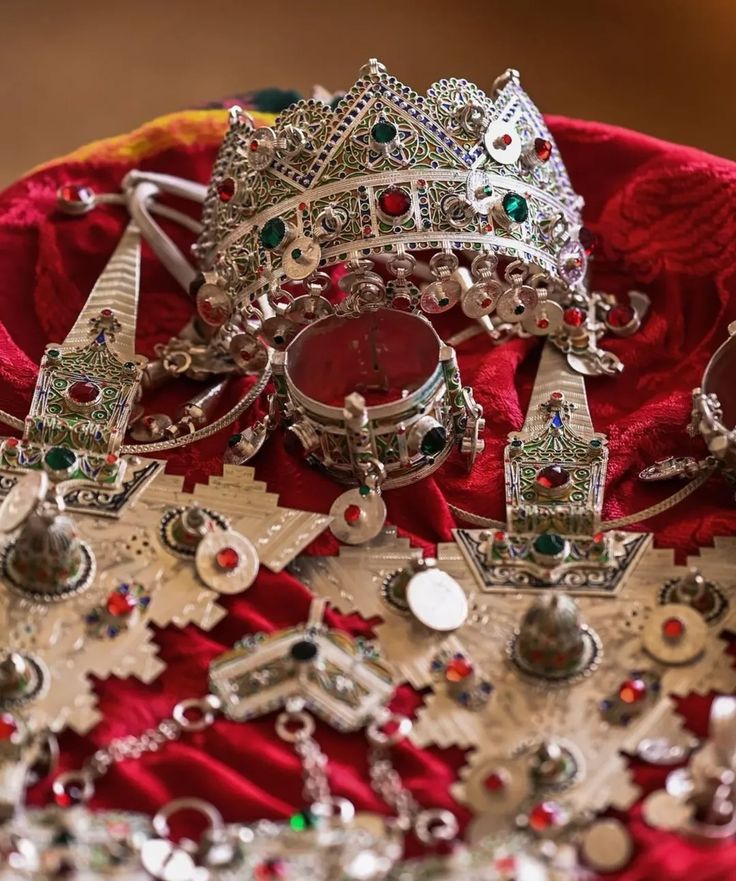
Wedding collections often include:
- Necklaces
- Fibulas
- Bracelets
- Earrings
- Head ornaments
Together, these pieces create an impressive visual statement.
Family Heritage
Many wedding ornaments are family heirlooms passed down through generations.
As a result, jewelry becomes a living connection between ancestors and future generations.
Cultural Pride
Wearing traditional jewelry during weddings reinforces cultural identity and community values.
Even today, many families continue these cherished customs.
Where Travelers Can Discover Amazigh Jewelry in Morocco
Visitors interested in authentic Amazigh jewelry have several opportunities to explore this cultural tradition firsthand.
Marrakech
Marrakech serves as an excellent starting point.
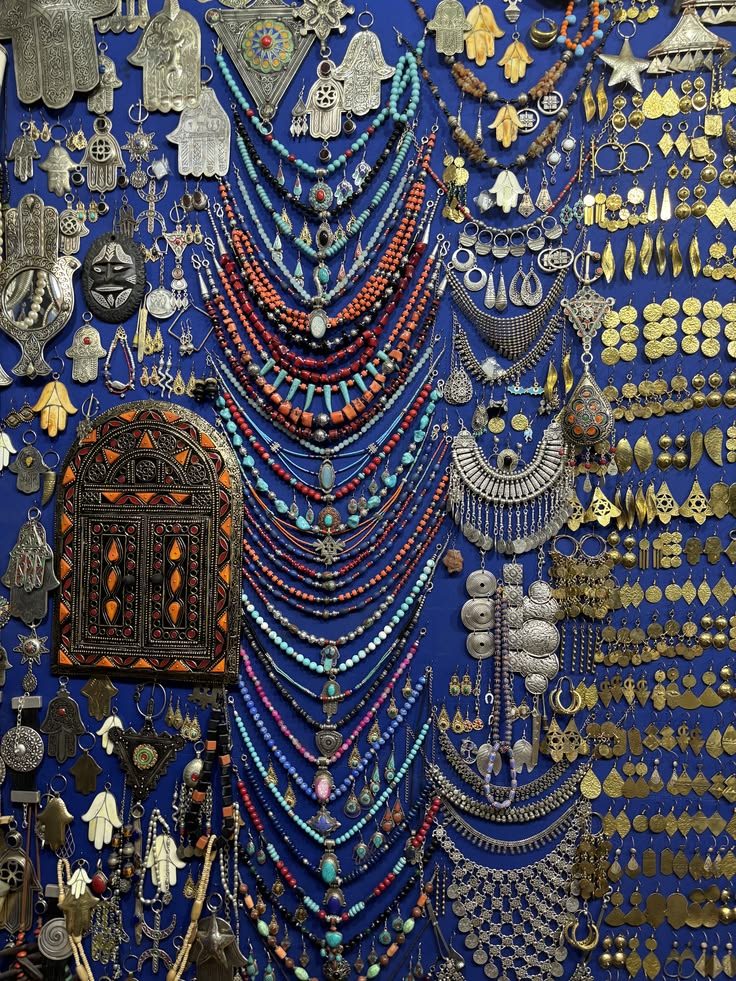
The city’s bustling souks feature antique dealers, artisan workshops, and specialized jewelry merchants.
Travelers can admire both traditional and contemporary interpretations of Amazigh designs.
Atlas Mountain Villages
A journey into the Atlas Mountains offers deeper cultural immersion.
Local communities often preserve traditional craftsmanship and maintain stronger connections to ancestral jewelry traditions.
Meeting artisans in these regions provides valuable insight into the cultural significance behind each piece.
Cultural Museums
Several museums throughout Morocco display historic Amazigh jewelry collections.
These exhibits help visitors understand the evolution of jewelry styles and their symbolic meanings.
Artisan Cooperatives
Many cooperatives support local craftspeople while preserving traditional techniques.
Purchasing from reputable cooperatives helps sustain cultural heritage and local economies.
How to Buy Authentic Amazigh Jewelry
Travelers often wish to bring home a meaningful souvenir from Morocco.
Authentic Amazigh jewelry can be an excellent choice, provided buyers know what to look for.
Examine Craftsmanship
Handcrafted pieces typically display slight variations and unique details.
These characteristics often indicate genuine artisan work.
Learn the Story
Ask sellers about the origins and symbolism of the piece.
Knowledgeable artisans and reputable merchants are usually eager to explain the cultural meanings behind their creations.
Respect Cultural Value
Remember that Amazigh jewelry represents more than decoration.
Purchasing thoughtfully helps honor the traditions and communities connected to these remarkable objects.
The Modern Revival of Amazigh Jewelry
In recent years, Amazigh jewelry has experienced renewed international interest.
Designers, collectors, and cultural travelers increasingly recognize its artistic and historical significance.
However, this revival extends beyond fashion.
Many young Amazigh artists are reinterpreting traditional motifs while preserving their cultural roots.
Their work bridges past and present, ensuring that ancient symbols continue to speak to new generations.
Meanwhile, cultural preservation initiatives across Morocco are helping document traditional techniques and support artisan communities.
These efforts play an essential role in safeguarding one of North Africa’s most distinctive artistic traditions.
Why Amazigh Jewelry Matters Today
In a rapidly changing world, traditional crafts often face the risk of being forgotten.
Moroccan Amazigh jewelry offers something increasingly rare: a tangible connection to centuries of history, identity, and storytelling.
Each piece represents more than artistic skill. It embodies memories, beliefs, family histories, and cultural resilience.
For travelers, understanding this symbolism transforms a beautiful object into a meaningful cultural experience.
Whether encountered in a mountain village, a museum collection, or a Marrakech souk, Amazigh jewelry reveals an extraordinary narrative woven through silver, color, and craftsmanship.
Frequently Asked Questions
What is Moroccan Amazigh jewelry?
Moroccan Amazigh jewelry is a traditional form of silver jewelry created by the Amazigh (Berber) people of Morocco. These handcrafted pieces often feature symbolic motifs, geometric patterns, enamel work, and protective amulets that reflect Amazigh culture, history, and identity.
Why do Amazigh people traditionally use silver instead of gold?
Silver has long been associated with purity, protection, and spiritual power in Amazigh culture. Historically, it was also more accessible than gold and served as a form of portable wealth that could be passed down through generations.
What do the symbols on Amazigh jewelry mean?
Many Amazigh jewelry symbols carry specific meanings. Triangles often represent femininity and fertility, eye motifs symbolize protection from the evil eye, while geometric patterns may represent nature, water, prosperity, or tribal identity.
What is a fibula in Amazigh jewelry?
A fibula is a traditional decorative brooch used to fasten garments. Amazigh women often wore pairs of fibulas connected by chains across the chest. These pieces served both practical and symbolic purposes and remain among the most iconic forms of Amazigh jewelry.
Is Amazigh jewelry still made today?
Yes. Skilled artisans across Morocco continue to create Amazigh jewelry using traditional techniques such as engraving, filigree, casting, and enameling. Many contemporary craftspeople combine ancestral designs with modern artistic influences.
Where can travelers buy authentic Amazigh jewelry in Morocco?
Authentic Amazigh jewelry can be found in Marrakech souks, Atlas Mountain villages, artisan cooperatives, cultural festivals, and specialized craft shops. Purchasing directly from artisans or reputable cooperatives helps support local communities and preserve traditional craftsmanship.
How can you identify authentic Amazigh jewelry?
Authentic Amazigh jewelry is typically handcrafted and may feature slight variations that reflect artisan work. Genuine pieces often include traditional symbols, detailed silverwork, and regional design characteristics. Reputable sellers should also be able to explain the history and symbolism behind the jewelry.
What role does Amazigh jewelry play in Moroccan weddings?
Amazigh jewelry is an important part of traditional wedding ceremonies. Brides often wear elaborate collections of necklaces, bracelets, earrings, and fibulas, many of which are family heirlooms passed down through generations.
What regions of Morocco are known for Amazigh jewelry?
The High Atlas Mountains, Anti-Atlas region, Souss Valley, Middle Atlas, and parts of southern Morocco are particularly famous for their Amazigh jewelry traditions. Each region has developed unique styles, motifs, and craftsmanship techniques.
Why is Amazigh jewelry important to Moroccan cultural heritage?
Amazigh jewelry preserves centuries of history, artistic expression, and cultural identity. Beyond its beauty, it serves as a living record of Amazigh traditions, beliefs, social customs, and craftsmanship, making it one of Morocco’s most valuable cultural treasures.
Photo Gallerie