The Living Storytellers of Jemaa El-Fna: Morocco’s Ancient Art of Halqa

Phone
+212 660 44 471

Contactyourtourguide@gmail.com

Office
1111 rue El,Rue koufa Essaouira 44000

Hours
Monday-Sunday:
24/7
The Living Storytellers of Jemaa El-Fna: Morocco’s Ancient Art of Halqa
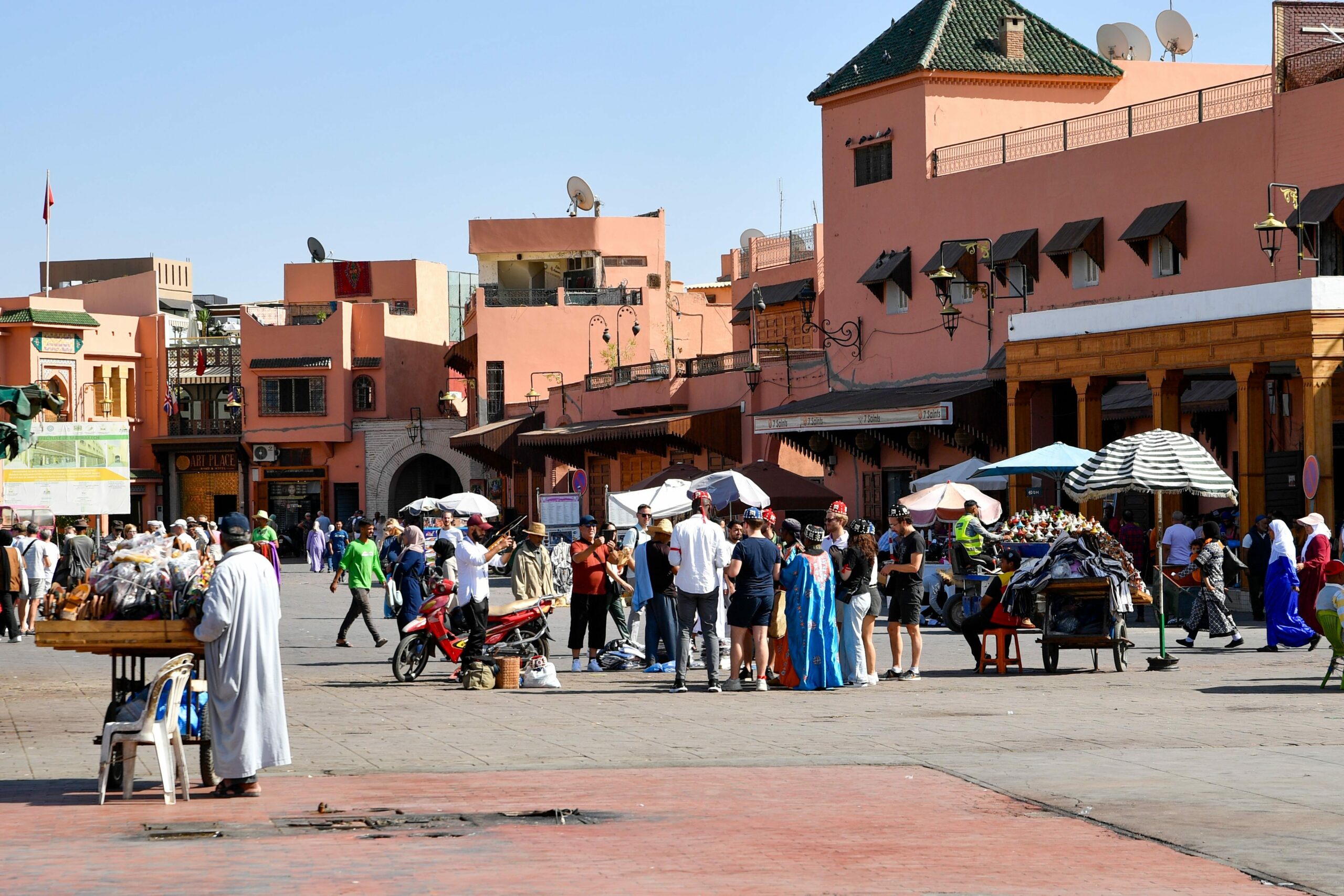
Every evening, Marrakech’s Jemaa el-Fna changes character. The large open square fills with food stalls, musicians, performers, local residents, and travelers. Among these moving circles of activity survives one of Morocco’s most remarkable oral traditions: the art of halqa.
At the center of a halqa stands a storyteller, performer, musician, comedian, or poet. Around this person, spectators form a circle and become part of a temporary open-air theater. There is no formal stage, fixed script, curtain, or reserved seating. The performance exists through the relationship between the artist and the people who stop to listen.
For generations, Jemaa el-Fna storytellers have shared heroic adventures, legends, comic scenes, moral lessons, historical memories, and tales of extraordinary characters. Their performances combine speech with gesture, facial expression, rhythm, suspense, humor, repetition, and audience participation.
This tradition reveals a side of Moroccan culture that cannot be preserved through buildings alone. While palaces, mosques, and medinas represent tangible heritage, halqa lives in voices, memories, performance skills, and public interaction.
In this guide, we will explore the meaning of halqa, the techniques used by Moroccan storytellers, the stories traditionally performed in Jemaa el-Fna, the role of the audience, UNESCO recognition, and the challenges facing this living cultural heritage.
Understanding the Moroccan Halqa
The word halqa means “circle” in Arabic.
In the context of Moroccan popular culture, it refers both to the performance and to the circle of spectators that forms around the performer.
A halqa can include:
- Storytelling
- Poetry
- Music
- Comedy
- Acrobatics
- Moral teaching
- Social commentary
- Riddles and verbal games
- Dramatic improvisation
- Audience participation
The person performing within the circle is often known as a hlayqi. Different spellings may be used when the Moroccan Arabic word is written in Latin characters, including hlayqi, halaïqi, or hlaiqi.
Not every hlayqi is a storyteller. Some specialize in music, physical performance, comedy, or other popular arts. Storytellers, however, have historically been among the most respected and memorable figures in the square.
Why the Circle Matters
The circular shape is essential to the performance.
Unlike a conventional theater, the halqa does not clearly separate the performer from the audience. Spectators stand close to one another and can see the reactions of people on the other side of the circle.
This creates a collective atmosphere. Laughter spreads quickly, suspense becomes visible, and the performer can immediately understand whether the audience is interested.
The circle also remains flexible. New listeners can join, while others can leave without stopping the performance. As the audience grows, the circle expands.
The storyteller must constantly protect this space. Voice, movement, humor, and suspense are used to prevent the circle from disappearing into the wider activity of the square.
The Historical Role of Jemaa El-Fna
Jemaa el-Fna has been central to the public life of Marrakech for centuries.
Located between the medina, the souks, the Koutoubia area, and several important streets, the square has served as a place of commerce, communication, food, entertainment, and social gathering.
Its name has several possible interpretations, and historians do not agree on one definitive translation. This uncertainty has become part of the square’s identity and mystery.
What is clear is that Jemaa el-Fna has never functioned as an ordinary empty plaza. Its importance comes from what people continuously create within it.
During the day, the square works largely as a commercial and meeting space. As the afternoon progresses, temporary performances and food stalls transform it into an open-air cultural landscape.
A Theater Built Every Evening
A traditional theater is designed to remain in place. Jemaa el-Fna’s theater disappears and is rebuilt every day.
The stage exists only when a performer chooses a space and people begin to gather. The audience creates the boundaries, while the storyteller creates the imaginary world within them.
A simple gesture can become a palace door. A walking stick may represent a horse, a traveler’s staff, or a symbol of authority. A change in voice can introduce an entirely new character.
When the performance ends and the audience moves away, nothing physical remains. The same part of the square can immediately become the location of another halqa.
This temporary character makes the tradition powerful but also fragile. Without performers and attentive audiences, the cultural space cannot survive.
Who Are the Jemaa El-Fna Storytellers?
Traditional storytellers are performers who have learned a large repertoire of tales, characters, expressions, and dramatic techniques.
Some gained their knowledge from older family members. Others studied with experienced performers by attending their halqas repeatedly.
Learning did not necessarily happen through written scripts. An apprentice listened, memorized important events, observed the master’s movements, and gradually developed a personal style.
A skilled storyteller does not simply repeat words. The performer must understand:
- How to attract an audience
- How to introduce characters
- How to control the rhythm of a story
- When to create suspense
- When to use humor
- How to respond to interruptions
- How to improvise
- How to end at the correct moment
- How to encourage contributions from listeners
These abilities can take many years to develop.
Stories Told in the Square
The repertoire of Jemaa el-Fna has included many types of narratives.
Some stories come from famous literary and heroic traditions. Others belong to local oral culture and may never have existed in one official written version.
Heroic Adventures
Heroic tales describe journeys, battles, loyalty, courage, cleverness, and difficult choices.
Characters such as Antar, the celebrated warrior and poet from the Arab literary tradition, have appeared in public storytelling across North Africa and the wider Arab world.
These stories could continue over several performances. A storyteller might end at a moment of danger, encouraging listeners to return and discover what happened next.
Legends and Extraordinary Characters
Moroccan oral culture contains stories of mysterious travelers, wise elders, powerful rulers, clever villagers, saints, extraordinary creatures, and characters associated with particular regions.
Each performer may change the details according to the audience and occasion.
Moral Fables
Some tales communicate lessons about honesty, patience, generosity, justice, family, or the consequences of greed.
The lesson is not always explained directly. Listeners are invited to understand it through the actions and mistakes of the characters.
Comic Stories
Humor is one of the storyteller’s strongest tools.
Comic tales may describe misunderstandings, exaggerated personalities, neighborhood conflicts, or clever characters who outwit more powerful opponents.
The storyteller can also use humor to comment on everyday social problems without turning the performance into a formal lecture.
Riddles and Verbal Games
A performance may include riddles, proverbs, wordplay, and questions directed at the audience.
These elements keep listeners involved and give the storyteller opportunities to improvise.
Darija as a Language of Performance
Many Jemaa el-Fna performances use Moroccan Darija.
Darija allows storytellers to speak directly to local audiences, use familiar expressions, and create jokes based on pronunciation or double meanings.
The language of the halqa is often more flexible than written language. It can include old expressions, regional vocabulary, proverbs, rhythmic phrases, and words borrowed from other languages.
Storytellers may change their vocabulary according to the audience. A performance directed toward local residents can contain references that are difficult to translate because the humor depends on shared cultural knowledge.
This is one reason why watching a halqa can remain fascinating even when a visitor does not understand every word. Voice, gesture, repetition, and audience reactions communicate part of the story.
Tamazight Traditions in the Square
Jemaa el-Fna has also welcomed performers using different varieties of Tamazight.
Marrakech has long been connected to the High Atlas, Anti-Atlas, Haouz, and Souss regions. Merchants, travelers, workers, musicians, and families brought regional languages and traditions into the city.
Tamazight poetry, music, jokes, and storytelling therefore form an important part of the square’s cultural diversity.
According to UNESCO, Jemaa el-Fna brings together storytellers, poets, Amazigh musicians, Gnawa performers, and other bearers of oral and musical heritage. UNESCO Intangible Cultural Heritage
The square should therefore not be understood as representing only one language or community. Its identity comes from the meeting of several Moroccan traditions.
How a Storyteller Builds a Performance
A successful halqa depends on more than the quality of the story.
The performer must first persuade people to stop. This can be difficult in a busy square filled with competing sounds and movement.
Attracting the First Listeners
The beginning may include a loud announcement, a surprising question, a joke, a rhythmic phrase, or a dramatic gesture.
Once a few people stop, others become curious. The first spectators help create the circle that attracts a larger audience.
Establishing the Story
The storyteller introduces the setting and principal characters without giving away too much information.
Familiar formulas may help listeners understand that the story is beginning. Repetition creates rhythm and gives late arrivals enough context to follow the action.
Creating Suspense
Pauses are extremely important.
A storyteller may stop before revealing a character’s decision or the result of an important action. The audience becomes silent and moves closer.
Changes in volume also create tension. A quiet voice can be more effective than shouting when listeners are already paying attention.
Using Humor
Humor helps maintain the connection between storyteller and audience.
The performer may add a local reference, respond to someone in the circle, or temporarily step outside the story to make a comment.
These moments make each performance different, even when the central story remains the same.
Ending the Performance
The end may complete the story, reveal a lesson, or simply pause the narrative until another session.
Traditionally, performers depended on voluntary audience contributions. The ability to choose the correct ending could influence whether listeners showed their appreciation.
Voice as a Performance Tool
The storyteller’s voice can create an entire cast of characters.
A deeper tone may represent an authority figure, while a faster rhythm can suggest an impatient or nervous character. A whisper may indicate secrecy, and a sudden shout can mark surprise.
Breathing, silence, and repetition are equally important.
The storyteller must also project the voice without modern sound equipment. This requires physical control and awareness of the surrounding noise.
Unlike recorded narration, a halqa performance changes according to the response of the audience. The storyteller can slow down, repeat an important line, or add an explanation immediately.
Gesture and Facial Expression
The visual dimension of halqa helps listeners follow the story.
Hand movements can describe size, direction, distance, or emotion. Facial expressions communicate fear, pride, confusion, joy, or suspicion.
The storyteller may physically imitate different characters, changing posture each time the speaker changes.
These movements are not random. Experienced performers develop a vocabulary of gestures that supports the spoken narrative.
UNESCO’s discussion of the square emphasizes that oral storytelling depends not only on words but also on rhythm, facial expression, gesture, and direct communication between performer and audience. The UNESCO Courier
Improvisation and the Living Story
A written story has a fixed text. A halqa story remains open to change.
The storyteller may preserve the principal characters and events while changing jokes, descriptions, dialogue, or the length of particular scenes.
The same story can therefore sound different when performed by another hlayqi.
Improvisation allows the performer to respond to:
- The age of the audience
- The size of the circle
- The time available
- Local events
- Interruptions from spectators
- Competition from nearby performers
- The general mood of the square
This flexibility is one of the reasons oral traditions can survive for generations. They preserve cultural memory without becoming completely frozen.
The Audience as Part of the Story
A halqa cannot exist without an audience.
Spectators do more than listen. They laugh, answer questions, repeat expressions, react to characters, offer comments, and sometimes become part of the performance.
A skilled hlayqi can transform an interruption into a joke or use a spectator’s response to develop the next scene.
The audience also helps decide whether the performance succeeds. If the story loses energy, the circle may become smaller. If suspense grows, new listeners join.
This immediate relationship is very different from watching a recorded video. The performer and audience share the same moment and influence each other continuously.
Halqa as Popular Education
Before radio, television, cinema, and digital media, public storytelling was an important source of entertainment and information.
Stories helped transmit:
- Cultural values
- Historical memories
- Proverbs
- Religious and ethical ideas
- Local expressions
- Social expectations
- Regional legends
- Practical wisdom
Storytellers could discuss serious subjects through fictional characters and humor.
A tale about an unfair ruler might communicate ideas about justice. A story about a dishonest merchant could warn listeners against greed. A clever traveler might demonstrate the value of patience and observation.
The halqa was therefore both entertaining and educational without resembling a classroom.
The Square’s Wider Cultural Ecosystem
Storytellers are only one part of Jemaa el-Fna.
The cultural space has traditionally included musicians, poets, Gnawa performers, Amazigh groups, acrobats, comedians, food sellers, herbalists, artisans, and other public figures.
Each activity contributes to the atmosphere of the square. Sounds overlap, audiences move between circles, and performers compete for attention.
This diversity helped Jemaa el-Fna become one of the most recognizable public spaces in Morocco.
However, not every activity should be treated in the same way. Visitors should avoid supporting performances that exploit wildlife and should focus instead on human artistic traditions such as storytelling, music, and theater.
UNESCO Recognition
Jemaa el-Fna played an important role in international discussions about intangible cultural heritage.
The square’s cultural space was proclaimed a Masterpiece of the Oral and Intangible Heritage of Humanity in 2001. It was later included on UNESCO’s Representative List of the Intangible Cultural Heritage of Humanity in 2008.
This recognition does not apply only to the physical square. It celebrates the practices, knowledge, performances, and social relationships that give the place meaning.
UNESCO identifies storytelling, poetry, music, popular performance, traditional knowledge, and everyday cultural exchange as essential parts of the square.
The recognition also helped demonstrate that heritage can exist in living voices and actions, not only in monuments and museum collections.
Tangible and Intangible Heritage
The difference between tangible and intangible heritage is especially clear in Marrakech.
The medina walls, Koutoubia Mosque, historic houses, gates, and monuments are physical structures. They can be photographed, repaired, and mapped.
A storyteller’s knowledge cannot be protected in the same way.
Recording a performance preserves an example, but it does not automatically preserve the artist’s ability to respond to a live audience. Writing down a story saves the words but not necessarily the gestures, timing, voice, or improvisation.
Protecting halqa therefore requires living transmission. Younger performers must have opportunities to learn directly from experienced storytellers.
Challenges Facing the Storytelling Tradition
The number of traditional storytellers in Jemaa el-Fna has declined.
Several connected factors have contributed to this change.
Modern Entertainment
Television, smartphones, social media, and online video provide immediate entertainment without requiring people to gather in a public square.
Younger audiences may be less familiar with long oral performances that develop slowly.
Loss of Experienced Masters
When an elderly performer dies without teaching an apprentice, an entire personal repertoire can disappear.
Some stories were never written or recorded in complete form.
Economic Difficulty
Traditional storytellers depend largely on audience contributions.
Music, food stalls, tourism services, and other attractions may receive more attention, making storytelling less financially sustainable.
Language Changes
Some old expressions and references are becoming difficult for younger listeners to understand.
Translation for international visitors can also be challenging because jokes and wordplay frequently depend on Darija or Tamazight.
Changing Use of Public Space
Noise, traffic, commercial pressure, crowd management, and competition for space can make quiet storytelling difficult.
A storyteller needs an audience capable of hearing and concentrating, even within the energetic atmosphere of the square.
Recording Is Not Enough
Photography, audio recordings, written collections, and documentary films are valuable preservation tools.
They can protect stories from total disappearance and help researchers compare different styles.
However, an archive cannot replace a living halqa.
The tradition depends on:
- Direct communication
- Improvisation
- Physical presence
- Audience reactions
- Shared language
- Public space
- Knowledge passed between generations
Preservation must therefore include both documentation and opportunities for live performance.
Teaching a New Generation
One of the most important ways to protect halqa is to involve young Moroccans.
Workshops, school visits, cultural associations, festivals, and meetings with experienced storytellers can introduce children and students to oral performance.
Learning storytelling develops several abilities:
- Memory
- Public speaking
- Listening
- Vocabulary
- Imagination
- Confidence
- Cultural knowledge
- Interpretation and improvisation
Young performers do not need to copy older masters exactly. The tradition can remain alive by allowing new storytellers to address contemporary audiences while respecting its essential methods.
Halqa Beyond Jemaa El-Fna
Although Jemaa el-Fna is Morocco’s most famous halqa space, public performance has existed in other cities and markets.
Historic squares, weekly souks, religious festivals, and neighborhood gatherings created opportunities for storytellers, musicians, poets, and comedians.
Places such as El Hedim Square in Meknes have also been associated with popular public performance.
The family home was another important setting. Grandparents and other relatives told stories to children during evening gatherings, celebrations, and quiet winter nights.
The public halqa and family storytelling tradition supported each other. Stories could travel from homes to marketplaces and return in new versions.
Experiencing Storytelling in Marrakech
Travelers interested in halqa should understand that authentic storytelling does not always follow a fixed timetable.
Late afternoon and evening are generally the best periods to observe the transformation of Jemaa el-Fna. However, the number and type of performers can change from one day to another.
Visitors can also search for:
- Cultural storytelling evenings
- Local heritage associations
- Museum programs
- Riad performances
- Guided cultural walks
- Storytelling festivals
- Workshops with local performers
A translated or bilingual storytelling event may be easier for visitors who do not understand Darija or Tamazight.
How to Watch Respectfully
A halqa is a working cultural performance, not simply a free tourist attraction.
Visitors should keep several points in mind:
- Join the circle without blocking local spectators
- Avoid pushing through the audience
- Do not photograph people closely without permission
- Contribute when appropriate
- Keep conversations quiet during the performance
- Do not treat performers as decorative objects
- Avoid using flash
- Respect requests not to film
- Support human performers rather than wildlife displays
Even if you do not understand every word, patient observation can reveal how the performer controls the audience.
Photography and Cultural Respect
Jemaa el-Fna is highly photogenic, but responsible photography matters.
Some visitors take close photographs without asking and then walk away. For performers who depend on public contributions, this can feel disrespectful.
Ask permission before taking a portrait or recording a long video. If a performer expects a contribution, agree clearly before filming.
Wide photographs of the square can capture the atmosphere without intruding on individuals.
The objective should be to remember the cultural experience, not reduce a living tradition to a quick social media image.
Why Storytelling Still Matters
In a world dominated by screens, the halqa offers a rare form of direct human communication.
The storyteller does not know exactly how the performance will unfold. The audience cannot pause, replay, or scroll past the story without leaving the circle.
Everyone must pay attention to the same voice at the same moment.
This shared experience encourages listening, imagination, humor, and social connection. It also keeps Darija, Tamazight expressions, proverbs, legends, and performance techniques in circulation.
The halqa reminds us that culture is not only something inherited from the pas
Frequently Asked Questions
What is a Moroccan halqa?
A halqa is a circle formed around a public performer. It can include storytelling, music, comedy, poetry, acrobatics, riddles, or other popular arts.
What does the word halqa mean?
Halqa means “circle” in Arabic. The name refers to the circular audience that gathers around the performer.
What is a hlayqi?
A hlayqi is a performer who works within a halqa. The person may be a storyteller, musician, comedian, poet, or another type of public artist.
Why are Jemaa el-Fna storytellers important?
They preserve Moroccan oral literature, performance techniques, proverbs, local expressions, social memory, and forms of public entertainment passed between generations.
What language do the storytellers use?
Many storytellers use Moroccan Darija. Performances in varieties of Tamazight have also been part of the square’s cultural life.
Is Jemaa el-Fna recognized by UNESCO?
Yes. Its cultural space was proclaimed a Masterpiece of the Oral and Intangible Heritage of Humanity in 2001 and included on UNESCO’s Representative List in 2008.
Which Moroccan city is famous for historic fountains?
Fes is especially known for its street fountains and historic water network. Marrakech also contains important Saadian examples.
The storytellers of Jemaa el-Fna preserve a form of theater that requires no building, written ticket, or permanent stage. A voice begins, people gather, and an ordinary section of the square becomes a world of heroes, travelers, jokes, mysteries, and lessons.
Their art depends on memory, but it is never a simple repetition of the past. Each audience changes the story, and each performer adds a different rhythm, expression, or interpretation.
For travelers, experiencing a halqa offers more than entertainment. It provides insight into Moroccan language, humor, imagination, and the social importance of public gathering.
As long as storytellers have a place to perform and audiences willing to listen, the circle can continue. Protecting that circle means protecting one of Morocco’s most human forms of cultural heritage: the ability to transform memory into a living story
Photo Gallerie